Unified Modeling Language

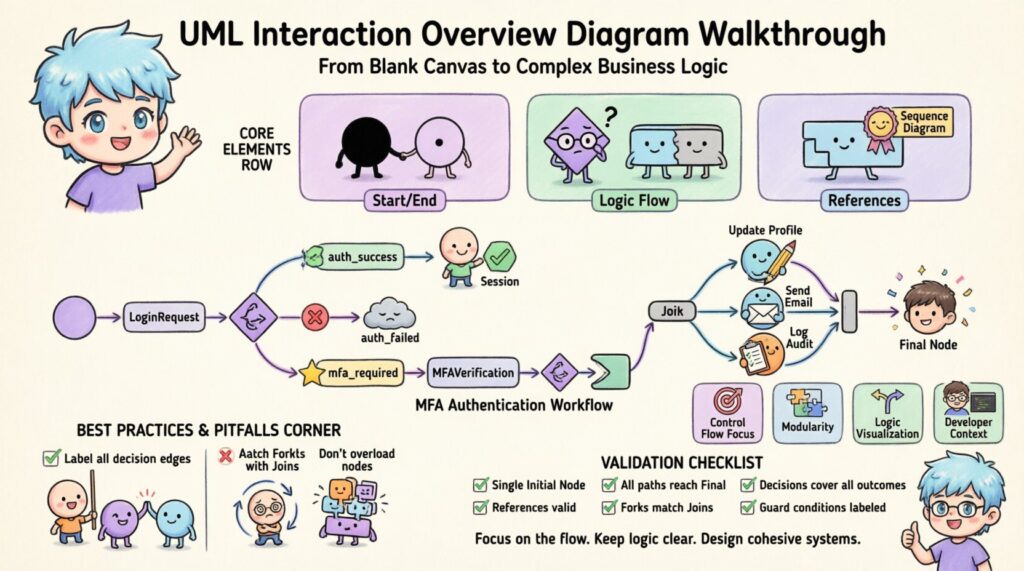
Step-by-Step UML Interaction Overview Diagram Walkthrough: From Blank Canvas to Complex Business Logic for Mid-Level Developers

Step-by-Step UML Interaction Overview Diagram Walkthrough: From Blank Canvas to Complex Business Logic for Mid-Level Developers

Designing complex systems requires more than just coding individual functions. It demands a clear visualization of how different parts of a system communicate and control the flow of data. For mid-level developers, the UML Interaction Overview Diagram (IOD) serves as a critical bridge between high-level architecture and low-level implementation details. Unlike a standard Sequence Diagram

Step-by-Step UML Interaction Overview Diagram Walkthrough: From Blank Canvas to Complex Business Logic for Mid-Level Developers Read More »

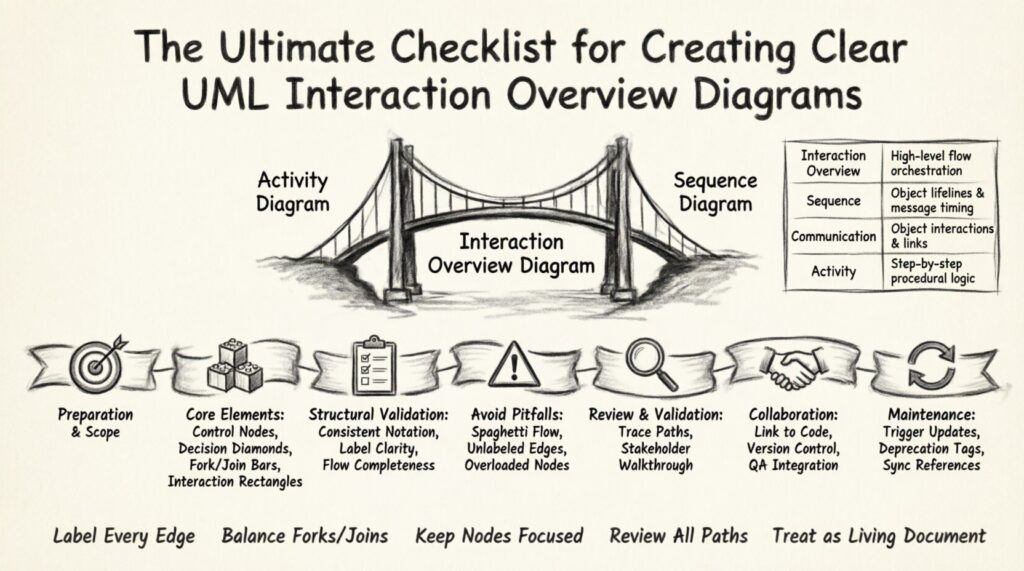
The Ultimate Checklist for Creating Clear UML Interaction Overview Diagrams: Avoid Ambiguity and Communication Errors

The Ultimate Checklist for Creating Clear UML Interaction Overview Diagrams: Avoid Ambiguity and Communication Errors

When designing complex software systems, visualizing behavior is as critical as writing the code itself. The UML Interaction Overview Diagram (IO Diagram) serves as a bridge between high-level activity flows and detailed sequence interactions. It allows architects and developers to map out control flow logic without getting lost in message details immediately. However, creating these

The Ultimate Checklist for Creating Clear UML Interaction Overview Diagrams: Avoid Ambiguity and Communication Errors Read More »

The Future of UML Interaction Overview Diagrams: How Modern Development Teams Are Using Them for Agile System Design

The Future of UML Interaction Overview Diagrams: How Modern Development Teams Are Using Them for Agile System Design

In the fast-paced world of software engineering, visual documentation serves as the bridge between abstract logic and concrete implementation. Among the various Unified Modeling Language (UML) notations, the Interaction Overview Diagram (IOD) stands out as a powerful tool for mapping complex control flows. While traditional Sequence Diagrams excel at detailing object interactions over time, they

The Future of UML Interaction Overview Diagrams: How Modern Development Teams Are Using Them for Agile System Design Read More »

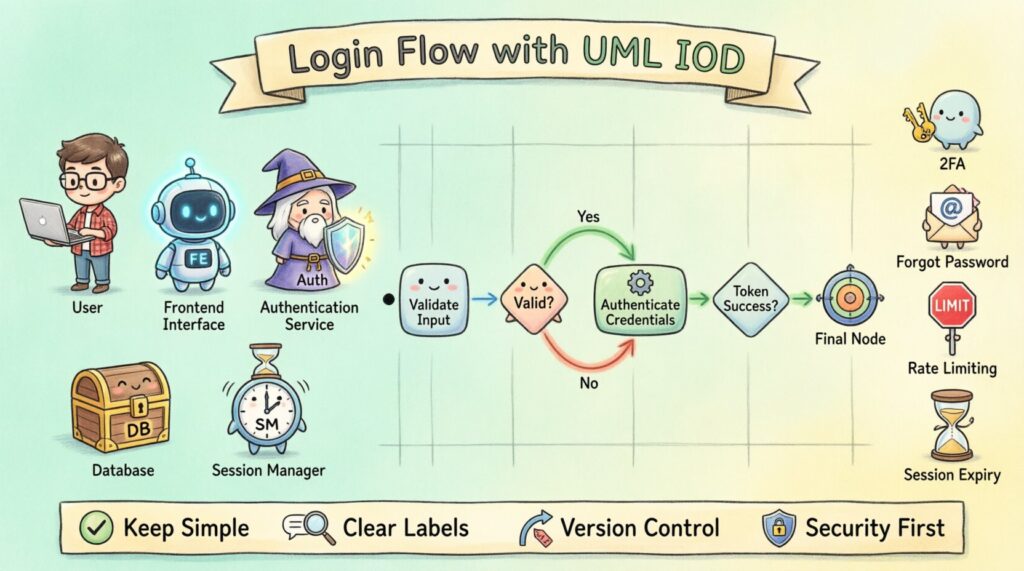
Tutorial: Building a Complete User Login Flow with UML Interaction Overview Diagrams for Beginners Who Need Visual Clarity

Tutorial: Building a Complete User Login Flow with UML Interaction Overview Diagrams for Beginners Who Need Visual Clarity

Designing secure and efficient authentication systems requires more than just writing code. It demands a clear understanding of how data moves between users, servers, and databases. For many developers and architects, the complexity of a login process can become obscured by implementation details. This is where visual modeling becomes essential. Specifically, the UML Interaction Overview

Tutorial: Building a Complete User Login Flow with UML Interaction Overview Diagrams for Beginners Who Need Visual Clarity Read More »

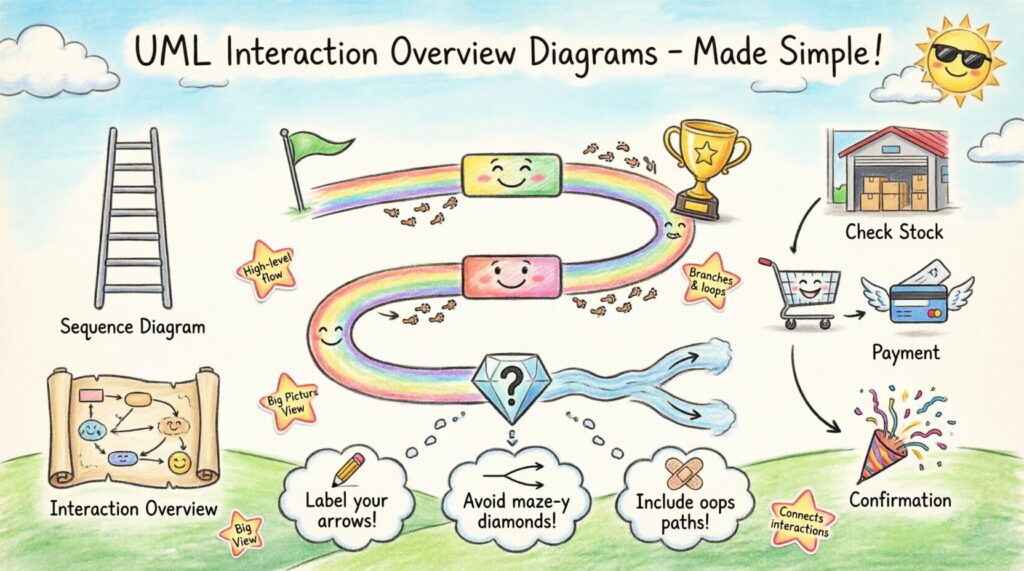
UML Interaction Overview Diagram: The Definitive Guide for Junior Developers to Master Sequence and Communication Flows

UML Interaction Overview Diagram: The Definitive Guide for Junior Developers to Master Sequence and Communication Flows

Software development is a complex discipline that relies heavily on clear communication. When systems grow, the interactions between components become intricate. Developers need tools to visualize these behaviors before writing code. The Unified Modeling Language (UML) provides several diagrams for this purpose. Among them, the Interaction Overview Diagram stands out as a high-level control flow

UML Interaction Overview Diagram: The Definitive Guide for Junior Developers to Master Sequence and Communication Flows Read More »

From Code to Clarity: A Software Engineer’s Guide to Visual Paradigm Community Edition for Agile UML Modeling

From Code to Clarity: A Software Engineer’s Guide to Visual Paradigm Community Edition for Agile UML Modeling

Introduction In today’s fast-paced software development landscape, clear communication and precise documentation are as critical as clean code. For Software Engineering teams embracing Agile methodologies, visual modeling with UML (Unified Modeling Language) provides a powerful bridge between abstract requirements and concrete implementation. However, adopting professional-grade modeling tools often comes with significant licensing costs—a barrier for

From Code to Clarity: A Software Engineer’s Guide to Visual Paradigm Community Edition for Agile UML Modeling Read More »

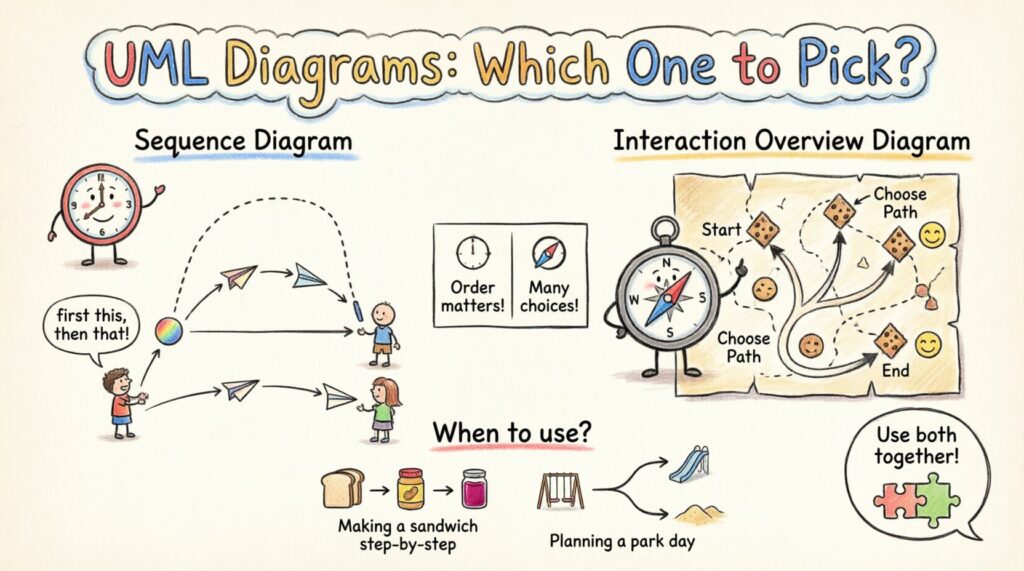
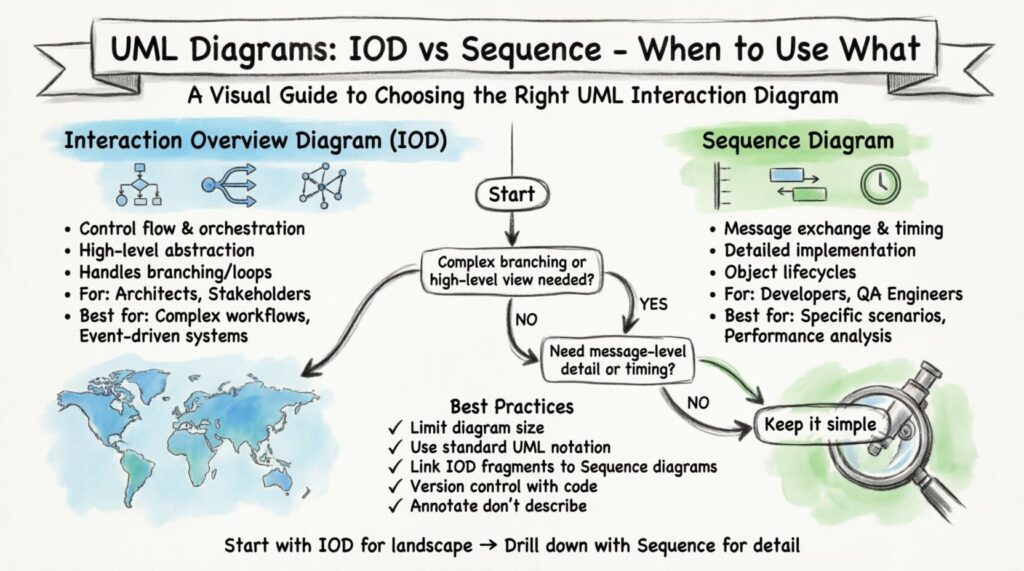
UML Interaction Overview Diagram vs. Sequence Diagram: A Clear Comparison for Choosing the Right UML Model for Your Full-Stack Projects

UML Interaction Overview Diagram vs. Sequence Diagram: A Clear Comparison for Choosing the Right UML Model for Your Full-Stack Projects

Designing complex software systems requires more than just writing code. It demands a clear blueprint of how different components communicate, how data flows, and how decisions are made within the architecture. Unified Modeling Language (UML) provides a standardized set of notations to visualize these interactions. Among the various diagram types, Interaction Diagrams play a pivotal

UML Interaction Overview Diagram vs. Sequence Diagram: A Clear Comparison for Choosing the Right UML Model for Your Full-Stack Projects Read More »

Best Practices for Using UML Interaction Overview Diagrams: When to Switch to Sequence Diagrams and When to Stay the Course

Best Practices for Using UML Interaction Overview Diagrams: When to Switch to Sequence Diagrams and When to Stay the Course

Effective software architecture relies heavily on clear communication between developers, stakeholders, and system designers. Visual modeling plays a critical role in this process. Among the various tools available, UML diagrams provide a standardized way to represent system behavior. Two specific types often cause confusion regarding their application: the Interaction Overview Diagram (IOD) and the Sequence

Best Practices for Using UML Interaction Overview Diagrams: When to Switch to Sequence Diagrams and When to Stay the Course Read More »

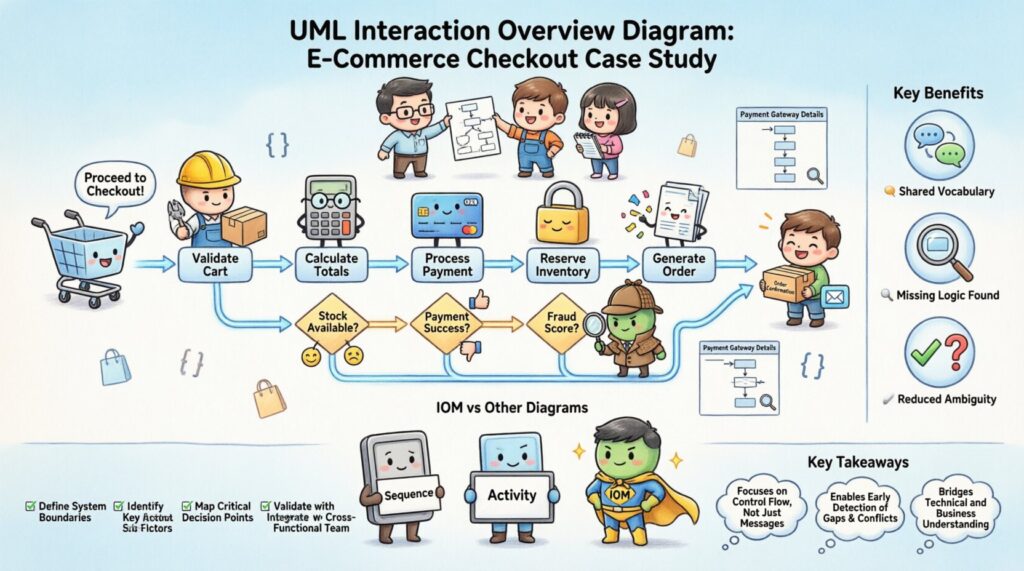
Real-World UML Interaction Overview Diagram Case Study: How We Modeled a Complex E-Commerce Checkout Process for Better Team Alignment

Real-World UML Interaction Overview Diagram Case Study: How We Modeled a Complex E-Commerce Checkout Process for Better Team Alignment

Modern e-commerce platforms handle transactions that are far more complex than simple buy-now buttons. A single checkout flow often involves inventory checks, fraud detection, multiple payment gateways, tax calculations, and loyalty point redemption. When development teams, QA engineers, and product owners discuss these flows, ambiguity often creeps in. One stakeholder imagines a synchronous process; another

Real-World UML Interaction Overview Diagram Case Study: How We Modeled a Complex E-Commerce Checkout Process for Better Team Alignment Read More »

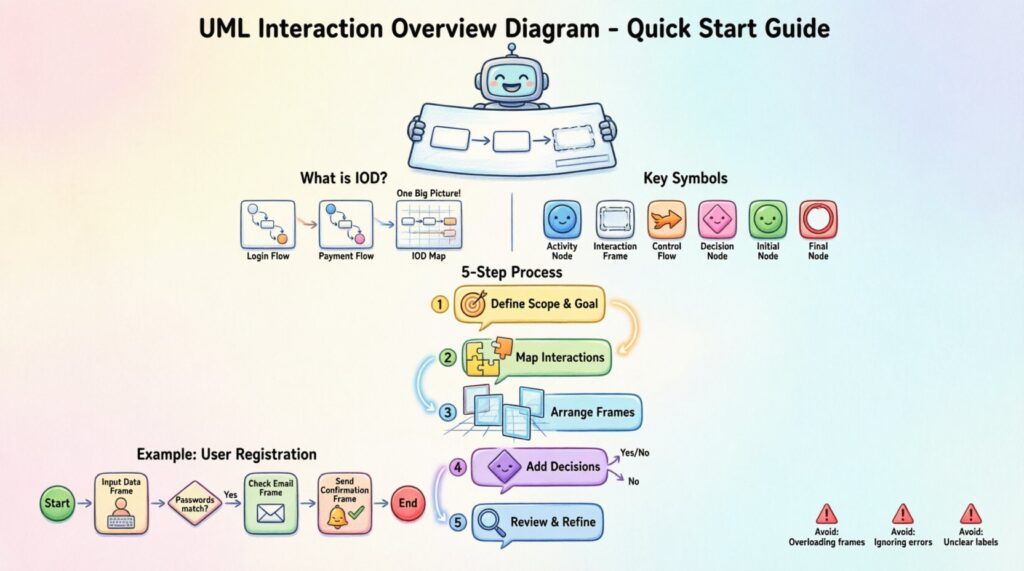
UML Interaction Overview Diagram Quick Start: How to Draw Your First Diagram in Under 15 Minutes Without Getting Confused

UML Interaction Overview Diagram Quick Start: How to Draw Your First Diagram in Under 15 Minutes Without Getting Confused

Designing complex systems requires more than just listing requirements. It demands a clear visualization of how different parts of a system behave over time. The UML Interaction Overview Diagram (IOD) serves as a high-level map for these behaviors, bridging the gap between static structure and dynamic behavior. If you have ever struggled to visualize the

UML Interaction Overview Diagram Quick Start: How to Draw Your First Diagram in Under 15 Minutes Without Getting Confused Read More »