UML

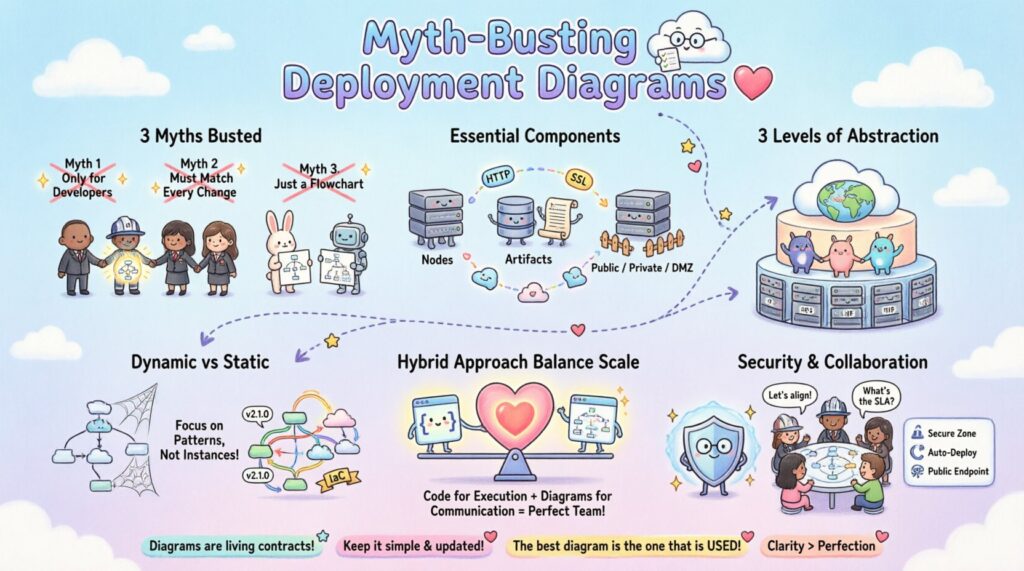
Myth-Busting Deployment Diagrams: Separating Hype from Practical Infrastructure Needs

Myth-Busting Deployment Diagrams: Separating Hype from Practical Infrastructure Needs

Deployment diagrams often sit in the middle of the architectural documentation landscape, caught between high-level conceptual models and low-level code implementations. For many teams, these visual representations are treated as static artifacts created once during a planning phase and then forgotten until a crisis occurs. This approach leads to a significant disconnect between what the

Myth-Busting Deployment Diagrams: Separating Hype from Practical Infrastructure Needs Read More »
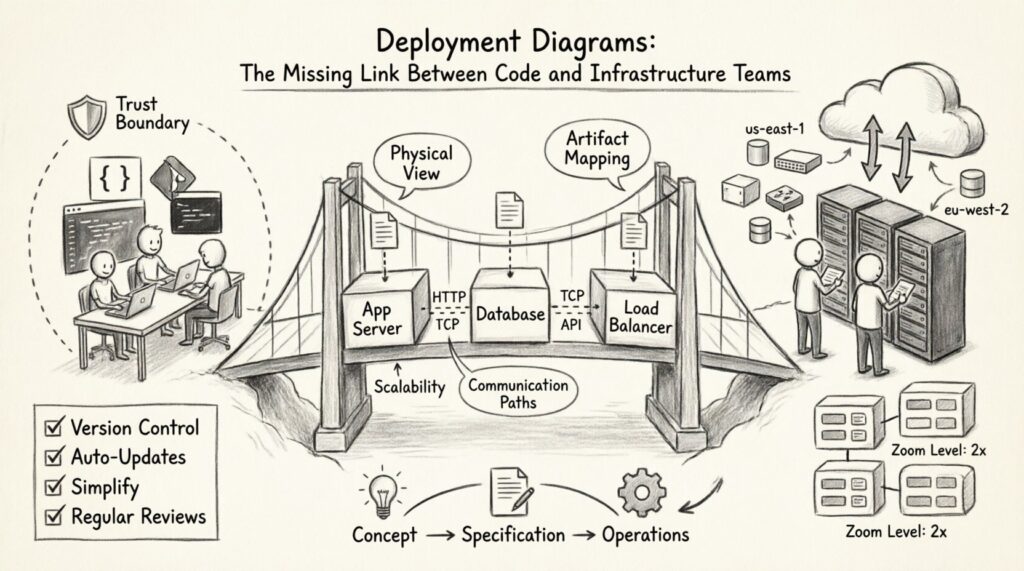
Deployment Diagrams: The Missing Link Between Code and Infrastructure Teams

Deployment Diagrams: The Missing Link Between Code and Infrastructure Teams

Modern software delivery relies heavily on the seamless interaction between two distinct groups: the developers who write the code and the infrastructure teams who ensure it runs. Often, a disconnect occurs here. Code changes happen rapidly, while infrastructure provisioning moves at a different pace. This friction can lead to environment mismatches, deployment failures, and security

Deployment Diagrams: The Missing Link Between Code and Infrastructure Teams Read More »

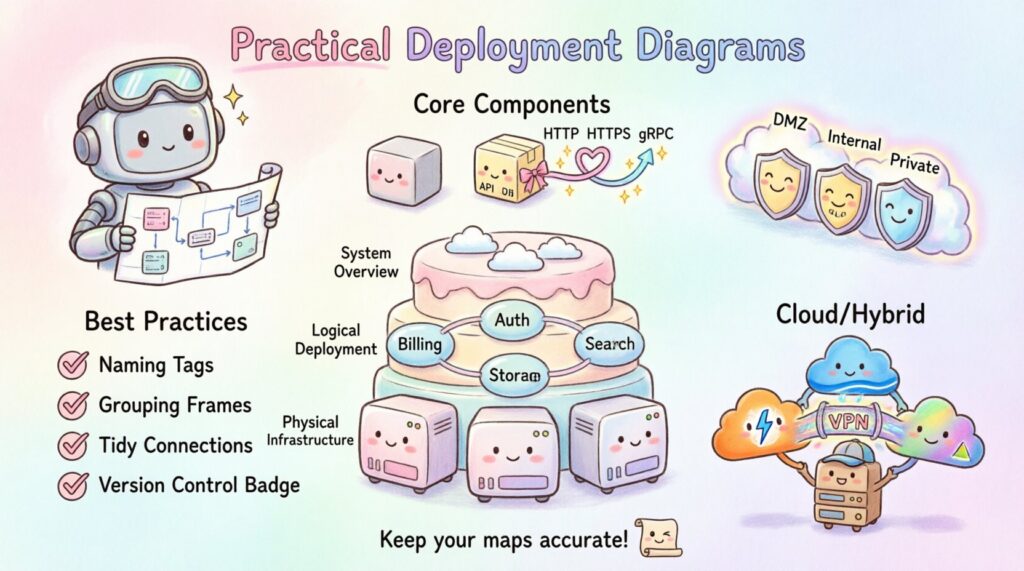
Practical Deployment Diagrams: Focusing on What Engineers Actually Need

Practical Deployment Diagrams: Focusing on What Engineers Actually Need

In the intricate world of software architecture, few artifacts bridge the gap between abstract design and physical reality quite like the deployment diagram. Yet, despite its fundamental importance, this specific type of visualization often suffers from neglect or over-complication. Engineers frequently encounter diagrams that are either too vague to be useful or so detailed that

Practical Deployment Diagrams: Focusing on What Engineers Actually Need Read More »

Deployment Diagrams Explained: A Definitive Overview for Beginners

Deployment Diagrams Explained: A Definitive Overview for Beginners

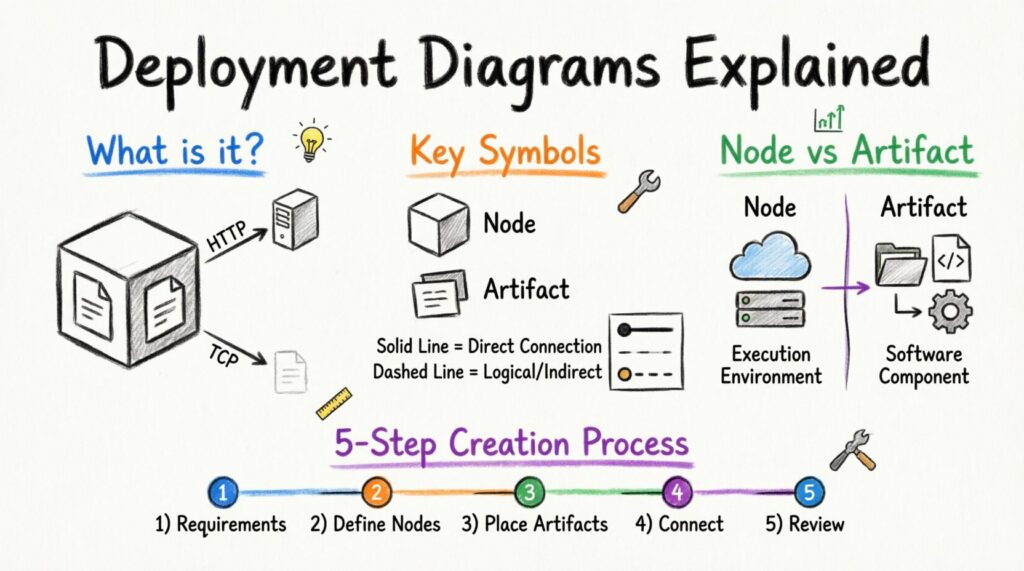
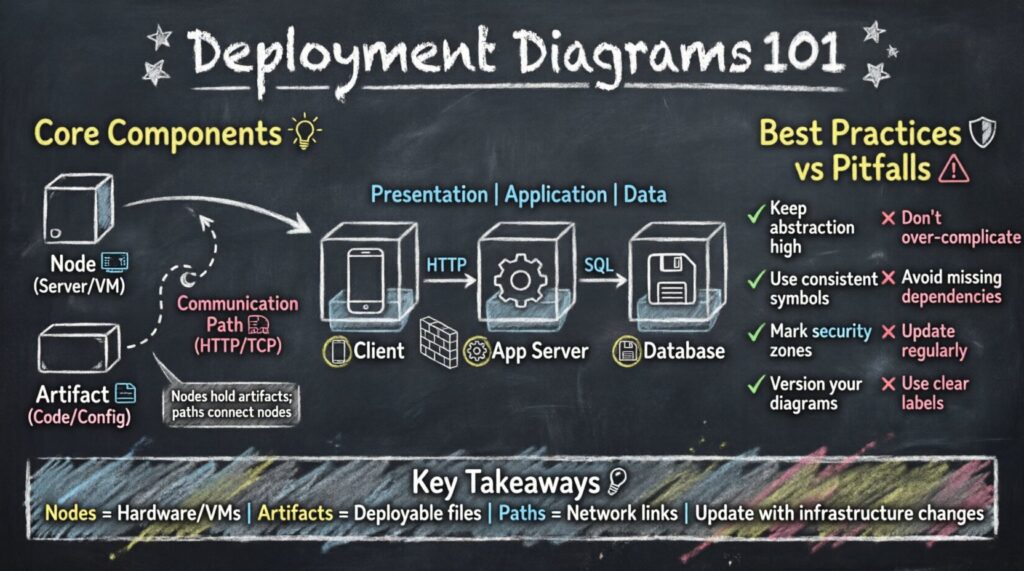
In the complex world of software architecture, visualizing how systems interact with their underlying infrastructure is critical. A deployment diagram provides a static view of the physical hardware and software environment where an application runs. Unlike other diagrams that focus on code structure or user interactions, this specific type of UML diagram maps the tangible

Deployment Diagrams Explained: A Definitive Overview for Beginners Read More »

Q&A: Your Top 10 Questions About Deployment Diagrams Answered Simply

Q&A: Your Top 10 Questions About Deployment Diagrams Answered Simply

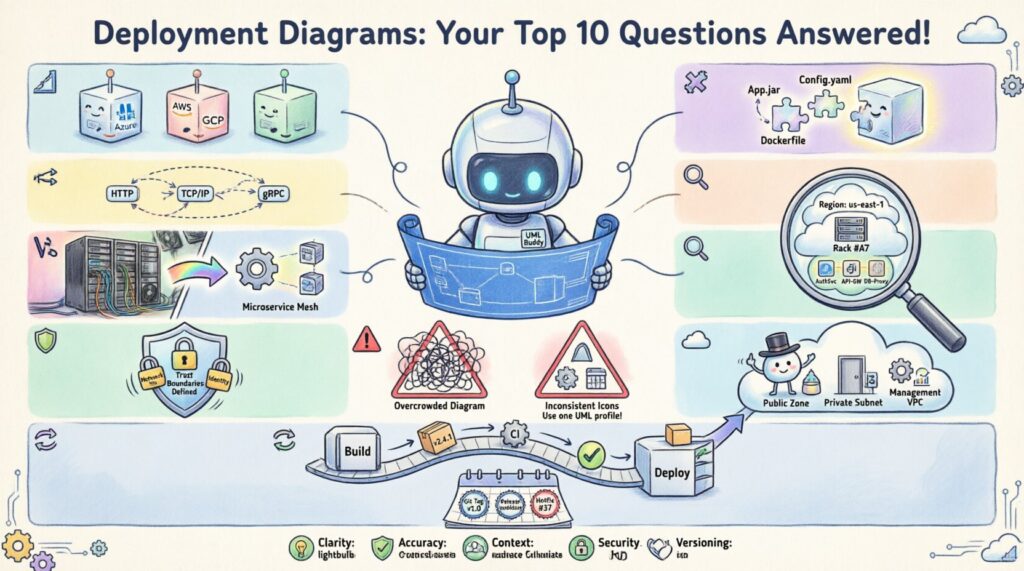
When designing complex software systems, visualizing how code meets hardware is critical. A deployment diagram provides this view. It maps the physical architecture of a solution. This guide addresses the most common inquiries regarding this UML artifact. We will cover components, relationships, and best practices without relying on specific vendor tools. Let’s dive into the

Q&A: Your Top 10 Questions About Deployment Diagrams Answered Simply Read More »

Deployment Diagrams: Translating Technical Specs into Visual Blueprints

Deployment Diagrams: Translating Technical Specs into Visual Blueprints

In the landscape of software engineering, the transition from abstract logic to physical reality often presents significant challenges. Developers write code, architects design systems, and operations teams manage infrastructure. Bridging the gap between these distinct roles requires a shared language. The deployment diagram serves as this critical interface. It provides a static view of the

Deployment Diagrams: Translating Technical Specs into Visual Blueprints Read More »

How to Update Deployment Diagrams Faster as Your Cloud Architecture Grows

How to Update Deployment Diagrams Faster as Your Cloud Architecture Grows

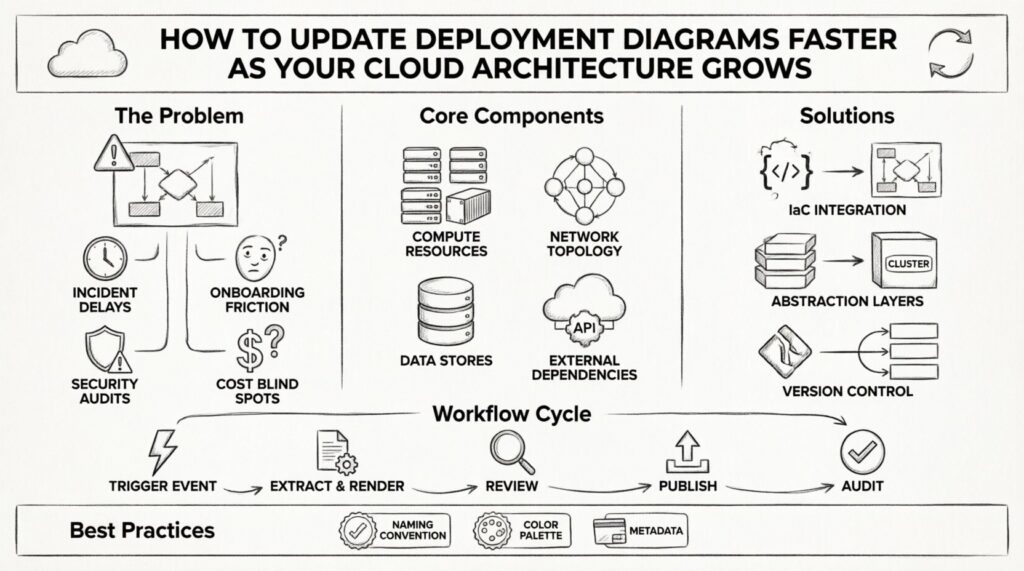
Cloud environments are dynamic. They shift, scale, and evolve on a daily basis. Yet, the diagrams intended to represent these environments often remain static artifacts from months or even years ago. A deployment diagram is more than a drawing; it is the visual contract between engineering teams and the infrastructure they rely on. When this

How to Update Deployment Diagrams Faster as Your Cloud Architecture Grows Read More »

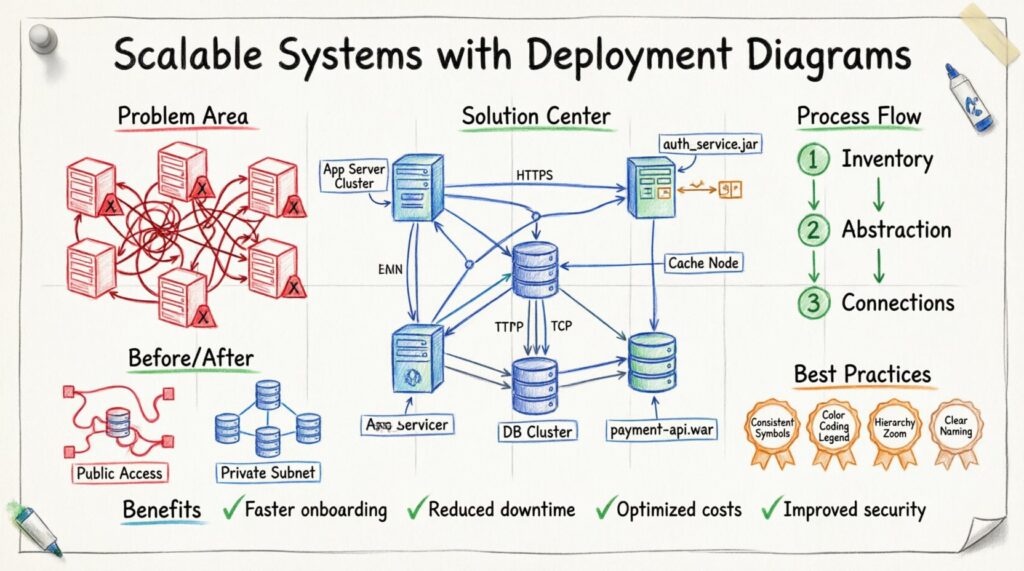
Real-World Case Study: Building Scalable Systems with Clear Deployment Diagrams

Real-World Case Study: Building Scalable Systems with Clear Deployment Diagrams

In the landscape of modern software engineering, the architecture of a system is not just a blueprint; it is the foundation of reliability and performance. When organizations grow, their infrastructure often becomes complex, hidden, and difficult to manage. This is where deployment diagrams become essential tools. They translate abstract code into tangible infrastructure, allowing teams

Real-World Case Study: Building Scalable Systems with Clear Deployment Diagrams Read More »

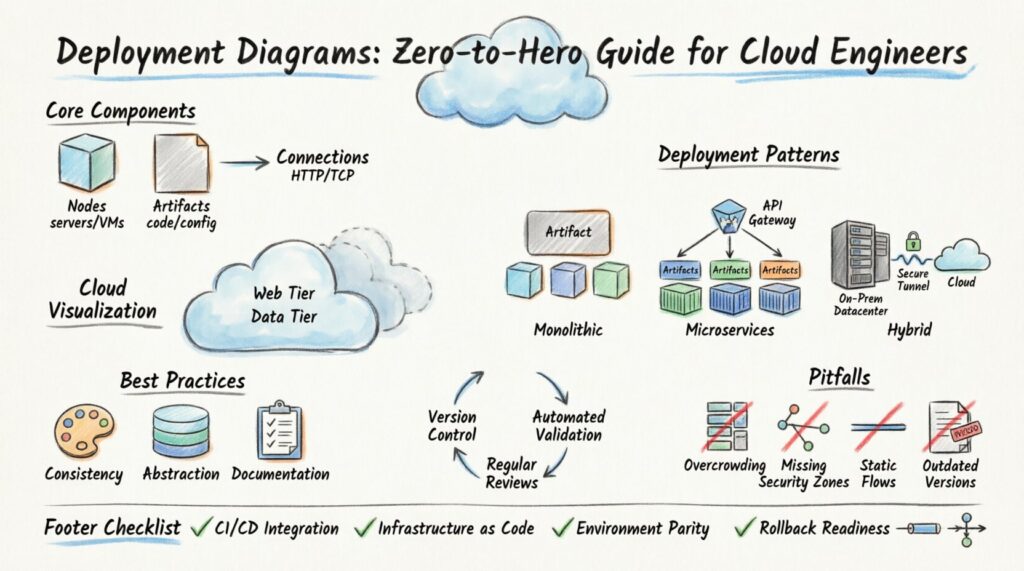
Deploying Diagrams: A Zero-to-Hero Guide for Cloud Engineers

Deploying Diagrams: A Zero-to-Hero Guide for Cloud Engineers

Cloud infrastructure is complex, dynamic, and vast. Without a clear map, navigating the deployment landscape becomes a guessing game. A deployment diagram serves as that map. It visualizes the physical and logical structure of a system, showing how software components interact with the underlying hardware and network resources. For cloud engineers, mastering the creation and

Deploying Diagrams: A Zero-to-Hero Guide for Cloud Engineers Read More »

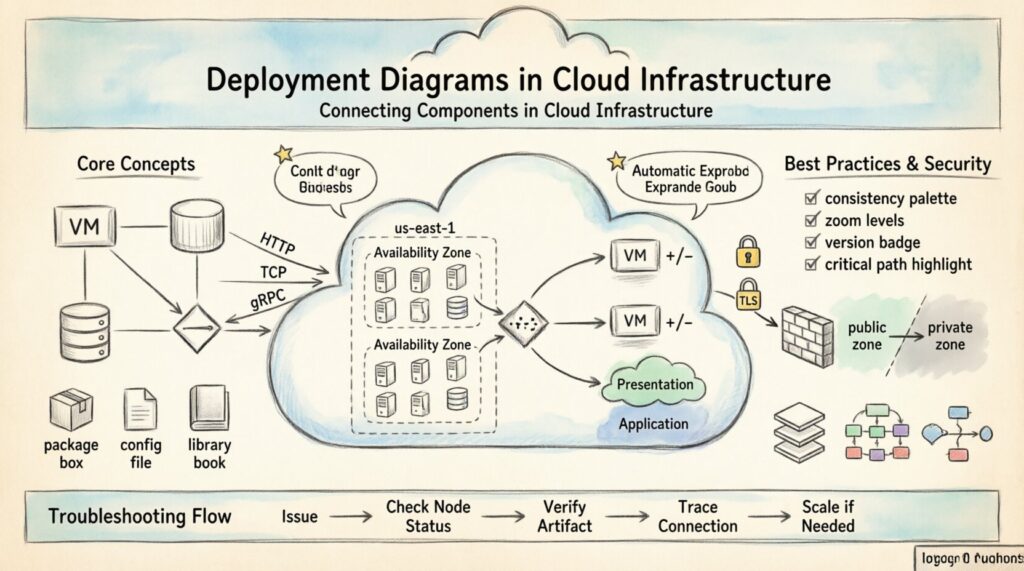
Deep Dive into Deployment Diagrams: Connecting Components in Cloud Infrastructure

Deep Dive into Deployment Diagrams: Connecting Components in Cloud Infrastructure

In modern software engineering, the architecture of a system is often invisible until it breaks. Visualizing how software components interact with the underlying hardware and network environments is critical for stability and scalability. A deployment diagram serves as the blueprint for this physical structure, mapping the software artifacts to the infrastructure nodes that execute them.

Deep Dive into Deployment Diagrams: Connecting Components in Cloud Infrastructure Read More »