vpadmin

Deep Dive into UML Interaction Overview Diagrams: Understanding Entry Points, Exits, and Nested Flows for Complex Architecture

Deep Dive into UML Interaction Overview Diagrams: Understanding Entry Points, Exits, and Nested Flows for Complex Architecture

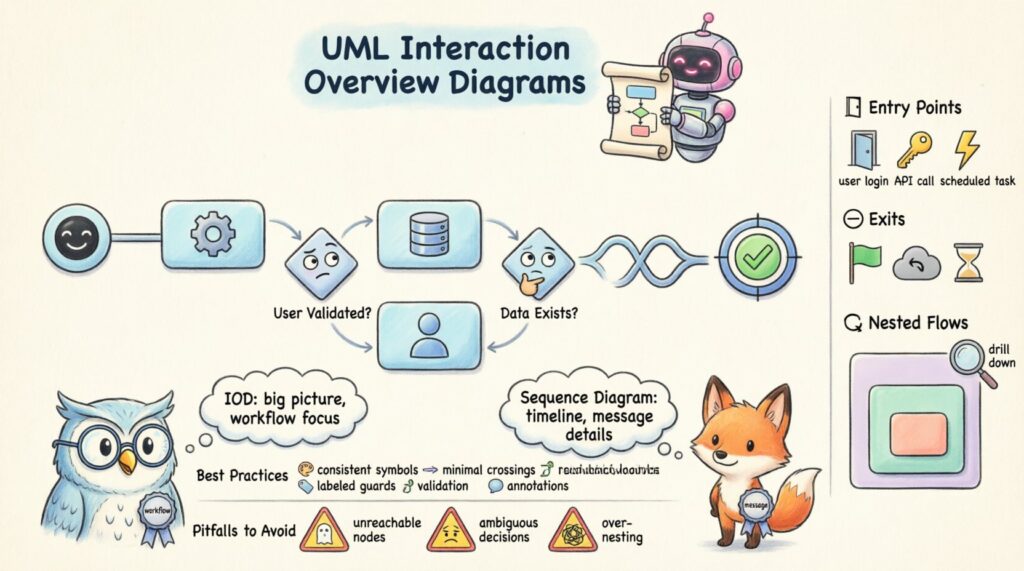
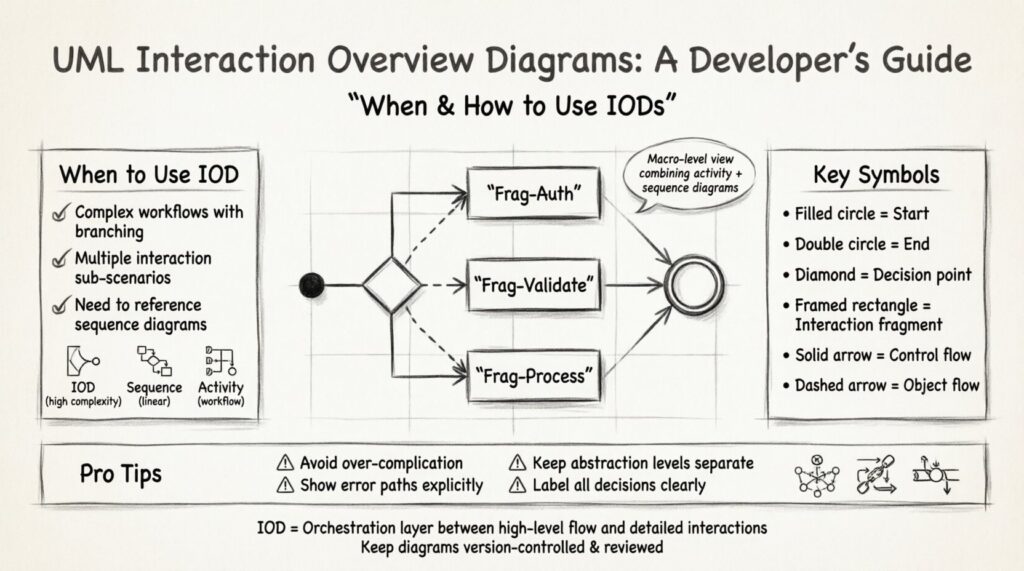
When modeling complex software systems, visualizing the flow of control is as critical as defining the data structures themselves. The Unified Modeling Language (UML) offers several diagram types, but few bridge the gap between high-level logic and detailed interaction as effectively as the Interaction Overview Diagram (IOD). This specific diagram type combines elements of activity

Deep Dive into UML Interaction Overview Diagrams: Understanding Entry Points, Exits, and Nested Flows for Complex Architecture Read More »

Troubleshooting Your UML Interaction Overview Diagram: What to Do When Your Flow Logic Doesn’t Match the Actual System Behavior

Troubleshooting Your UML Interaction Overview Diagram: What to Do When Your Flow Logic Doesn’t Match the Actual System Behavior

Designing complex systems requires precision. When you create an Interaction Overview Diagram (IOD), you are mapping the dynamic behavior of a system. However, a common challenge arises during development: the logic depicted in the diagram does not align with how the actual software behaves. This discrepancy can lead to costly debugging cycles and architectural instability.

Troubleshooting Your UML Interaction Overview Diagram: What to Do When Your Flow Logic Doesn’t Match the Actual System Behavior Read More »

Frequently Asked Questions About UML Interaction Overview Diagrams: Answers for Developers Unsure When to Apply This Specific UML Type

Frequently Asked Questions About UML Interaction Overview Diagrams: Answers for Developers Unsure When to Apply This Specific UML Type

Modeling software architecture requires precision. Among the various Unified Modeling Language (UML) diagram types, the Interaction Overview Diagram (IOD) occupies a unique space. It bridges the gap between high-level control flow and detailed object interactions. Many development teams encounter scenarios where standard sequence diagrams become too cluttered, or activity diagrams lack the necessary context of

Frequently Asked Questions About UML Interaction Overview Diagrams: Answers for Developers Unsure When to Apply This Specific UML Type Read More »

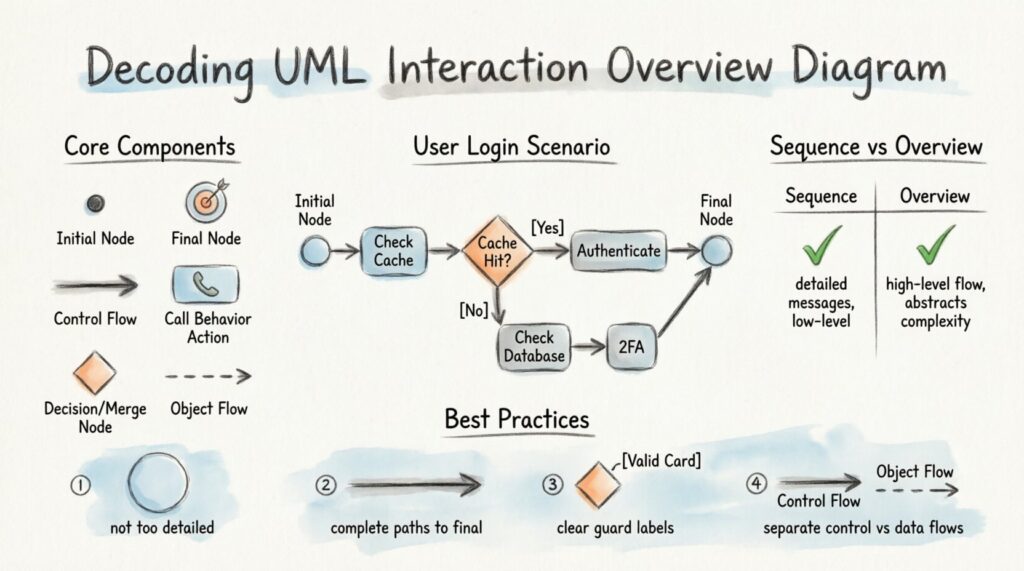
Decoding the UML Interaction Overview Diagram: A Component Breakdown for Beginners Who Struggle with UML Notation

Decoding the UML Interaction Overview Diagram: A Component Breakdown for Beginners Who Struggle with UML Notation

Unified Modeling Language (UML) provides a standardized way to visualize the design of a system. However, certain diagram types remain obscure to those new to software architecture. Among these, the Interaction Overview Diagram often causes confusion. It sits between the high-level flow of an Activity Diagram and the detailed messaging of a Sequence Diagram. This

Decoding the UML Interaction Overview Diagram: A Component Breakdown for Beginners Who Struggle with UML Notation Read More »

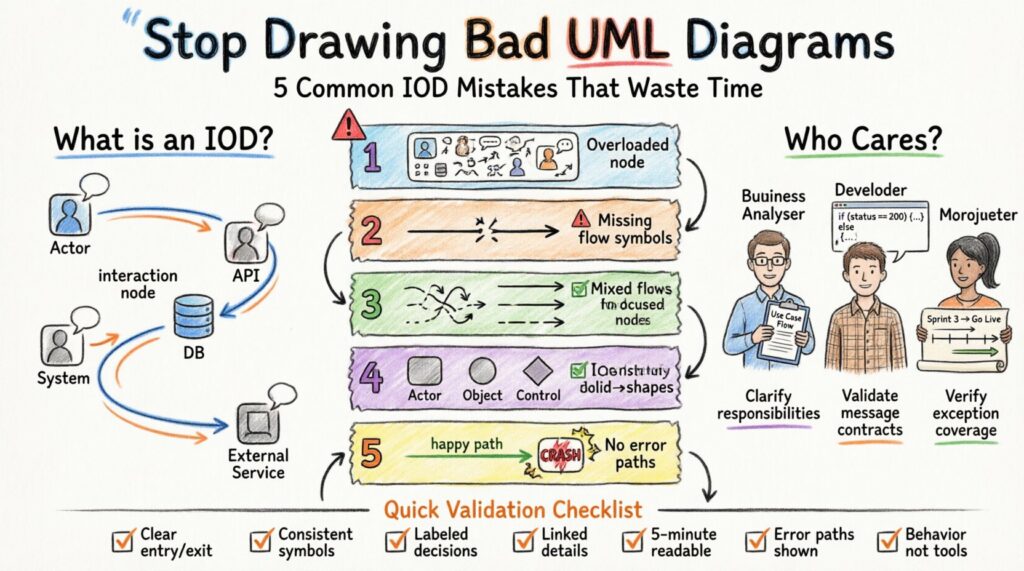
Stop Drawing Bad Diagrams: Common Mistakes in UML Interaction Overview Diagrams That Confuse Stakeholders and Waste Time

Stop Drawing Bad Diagrams: Common Mistakes in UML Interaction Overview Diagrams That Confuse Stakeholders and Waste Time

Creating clear documentation is a cornerstone of successful software development. Among the various modeling tools available, the UML Interaction Overview Diagram (IOD) plays a critical role in visualizing the flow of control between interaction diagrams. However, many teams struggle to utilize this specific notation effectively. When an Interaction Overview Diagram is poorly constructed, it does

Stop Drawing Bad Diagrams: Common Mistakes in UML Interaction Overview Diagrams That Confuse Stakeholders and Waste Time Read More »

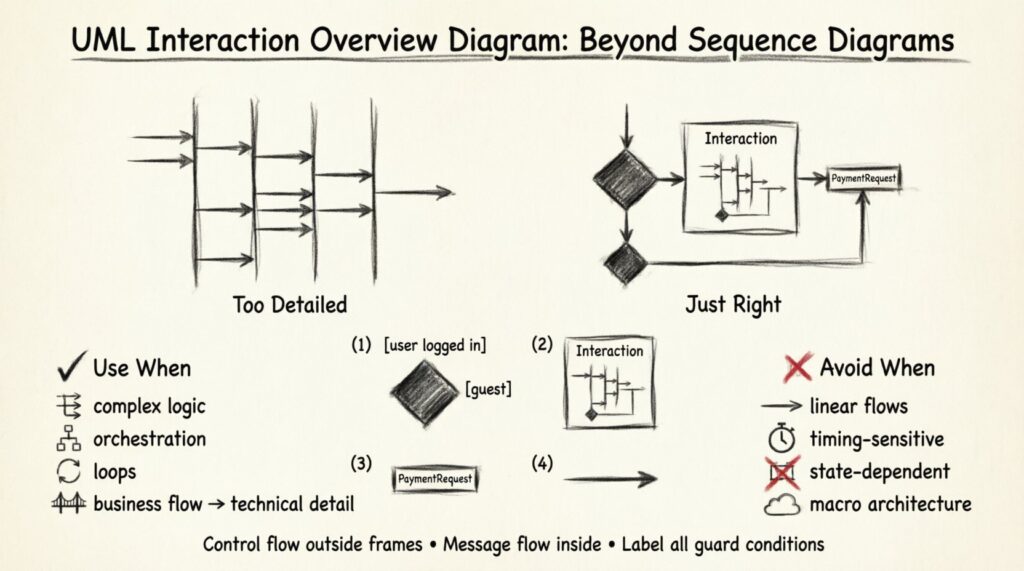
UML Interaction Overview Diagram Myth-Buster: Why It’s Not Just a Fancy Sequence Diagram and When It Actually Adds Value

UML Interaction Overview Diagram Myth-Buster: Why It’s Not Just a Fancy Sequence Diagram and When It Actually Adds Value

UML (Unified Modeling Language) offers a variety of tools for visualizing system behavior. Among these, the Interaction Overview Diagram (IOD) often sits in the shadows of its more popular cousin, the Sequence Diagram. Developers and architects frequently assume the IOD is merely a scaled-up version of a sequence diagram, or a way to stitch multiple

UML Interaction Overview Diagram Myth-Buster: Why It’s Not Just a Fancy Sequence Diagram and When It Actually Adds Value Read More »